A 7add11 — Violin
A 7add11 along GDAE: where each tone falls under the fingers, and which pairs bow together.
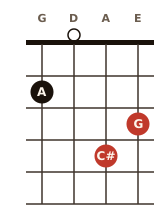
A 7add11 is built from A – C# – D – E – G. The maps below place those tones along the Violin's GDAE strings and name which finger reaches each one in position — every note plays back plucked, the way this site's audio speaks.
Read these as maps rather than as things to hold: a bow rests on one string, or leans between two neighbors, so what is playable at once is a PAIR — and the charts flag which adjacent pairs in each chord a single bow stroke can take. The rest of the chord arrives by rolling across the strings, or by letting the G or E ring open underneath the melody.
Open string for open string the Violin sounds exactly like a mandolin — the pitches are identical. What is not identical is anything after that: no plectrum, no fixed dividing line under the finger, and a bow that can keep a note alive as long as the arm keeps moving.